


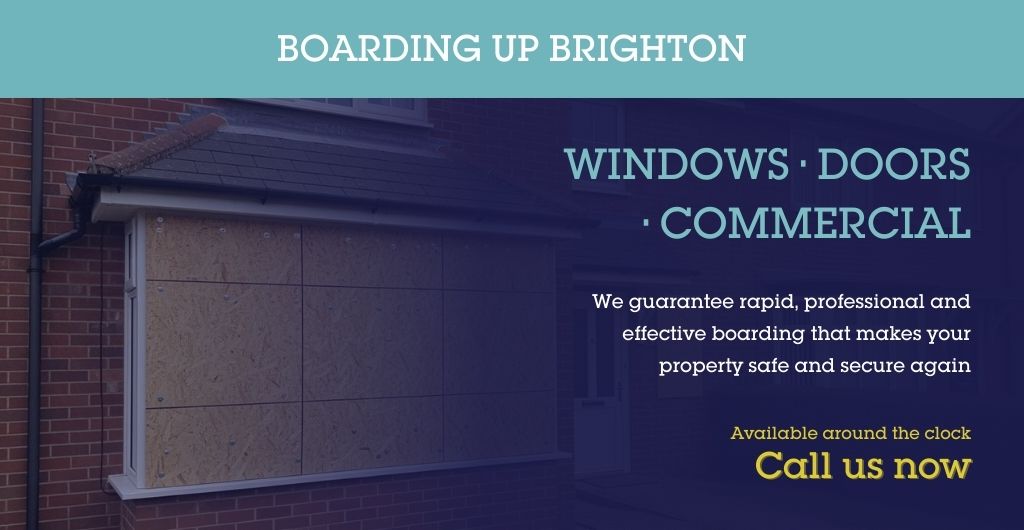
Insurance Claims Support for Boarding Up in Brighton (BN Postcodes)
When you’ve had a break-in, storm damage, vandalism or an accident, the last thing you need is a confusing insurance process on top of an already stressful situation. If you need boarding up in Brighton and you’re also thinking ahead to an insurance claim, we can help you in two practical ways: we secure the property properly, and we provide the clear documentation insurers typically ask for.
We cover Brighton and the wider BN postcode area (BN1–BN88), including busy city-centre streets, seafront properties exposed to wind, and rural villages where getting a site secured quickly can prevent further loss.
If you need urgent help first, go straight to our emergency boarding up page and call 01273 092 166.
What we can (and can’t) do with insurance claims
We work alongside the insurance process, but it’s important to be clear about roles.
We can:
- Secure doors, windows, shopfronts and roof openings to prevent further damage and reduce risk
- Provide an itemised invoice, a clear statement of works, and time-stamped photos showing what we attended and what we secured
- Explain what we’ve installed (materials, fixing method, and how it can be removed for later repairs)
- Liaise sensibly on-site with building managers, police attendance, or your glazier/contractor where needed
We can’t:
- Approve claims or decide cover (we’re not loss adjusters)
- Advise you on policy wording or legal liability
- Carry out reinstatement trades like glazing replacement, joinery repairs, plastering or smoke/odour remediation after a fire (our role is to secure the opening)
If anything about the opening is unsafe or the frame is too damaged to secure non-destructively, we’ll talk you through the options before proceeding.
The main insurance question: “Do I need to secure the property right away?”
In most cases, yes. Insurers generally expect you to take reasonable steps to prevent further loss. In Brighton and along the coast, that can matter quickly—wind-driven rain off the Channel can soak interiors through a broken sash window, and an unsecured shopfront on a busy route can attract repeat attempts.
Typical examples we see across BN1–BN3 and surrounding areas:
- A smashed pane on a ground-floor flat near Western Road becomes a security risk overnight
- A cracked bay window on a Victorian terrace off Lewes Road worsens after a windy evening
- A damaged rear door in an alleyway near London Road leaves a property vulnerable until repairs can be arranged
Boarding up is often the quickest way to stabilise the situation so the rest of the claim can progress calmly.
What to do before you call your insurer (or while you’re waiting)
Only do what’s safe. If there’s a risk of injury, unstable glass, or an intruder may still be nearby, step back and call the police first.
Practical steps that usually help a claim:
- Get a crime reference number (if burglary/vandalism) or incident details if another party is involved.
- Take a few photos from a safe distance showing the damage and wider context (don’t touch broken glass).
- Prevent access if you can: close internal doors, keep people away, and move valuables out of sight.
- Call your insurer early to log the incident and ask if they have any immediate requirements.
- Arrange emergency securing to protect the opening.
If you’re dealing with a break-in, our burglary repairs & boarding page explains what happens next in more detail.
How we document boarding-up work for insurance
Insurers and managing agents usually want clarity: what was damaged, what was done, and why it was necessary. Our paperwork is designed to be easy to forward.
You can typically expect:
- Time-stamped site photos before and after boarding up (and during, where helpful)
- A written statement of works (what was secured and how)
- Material detail (e.g., 18mm exterior-grade plywood for larger openings; OSB where appropriate for smaller/less exposed areas)
- Fixing method notes (e.g., internal baton and screw fixings where possible; anti-tamper fixings when the property will be unattended)
- An itemised invoice suitable for claim submission
If access is restricted (for example, flats with communal entry systems or properties with damaged locks), we’ll note what was required to gain safe access.
What insurers usually ask about boarding up (and how we handle it)
Every policy is different, but these questions come up repeatedly:
“Was it an emergency?”
If the opening leaves the property insecure or exposed to weather, it’s usually reasonable to treat it as urgent. We’ll describe the risk we observed (e.g., missing glazing at street level, compromised door leaf, roof opening allowing water ingress).
“Why did you use plywood/OSB instead of glazing replacement?”
Because boarding up is a temporary security measure designed to:
- prevent entry
- reduce risk of further damage
- allow time for measured replacement glazing and proper repairs
For the specific solutions we use, see window boarding in Brighton and door boarding up.
“Will the boarding damage my frames?”
We aim for secure, sensible fixing. Where the surrounding frame is intact, we often use methods that avoid unnecessary damage, such as internal bracing/battens. If the frame is already split or unsafe, we may need a more robust fix—if so, we’ll explain why before starting.
“How long can it stay in place?”
Boarding is intended as short-term protection while repairs are arranged. If you need something more robust for a vacant property or longer delays, we can discuss longer-term options during the visit, and you can also review our guidance on vacant property security.
Common claim scenarios in Brighton & the BN area
Brighton’s mix of property types and exposures changes the nature of insurance-related callouts.
- Victorian and Edwardian terraces (Preston Park, Hanover, Seven Dials): large sash windows and bays mean bigger panels and careful fixing to uneven reveals.
- Seafront flats and squares (Kemptown, Brunswick, Hove seafront): salt air and strong winds make weatherproofing and tight fitting more important.
- Retail units and hospitality (North Laine, The Lanes, Western Road): shopfront glazing and out-of-hours securing to protect stock, shutters and internal fittings.
- Student and rental stock (Moulsecoomb, Lewes Road corridor): quick securing after accidental impacts or break-ins, with clear documentation for landlords/agents.
If your incident relates to weather, our storm damage boarding page covers immediate steps.
How we keep work “insurance-friendly” (without overcomplicating it)
We focus on doing what an insurer expects: reasonable, proportionate steps to secure.
That generally means:
- Using appropriate thickness boards (commonly 18mm exterior-grade plywood for exposed/large openings)
- Ensuring boards are fixed so they can’t be removed from outside (especially ground-floor and street-facing windows)
- Avoiding unnecessary interference with undamaged parts of the building
- Recording what we’ve done clearly, so the next contractor can quote for permanent repairs
Where a temporary steel door is a better fit than timber boarding (for example, repeated forced entry or a door opening with no reliable frame left), we’ll explain that option on site and document it properly for your records.
Paying for boarding up: do I pay first, or does the insurer?
This depends on your policy and whether you’re working through an approved supplier network.
In practice, many customers:
- Pay for emergency securing upfront, then reclaim (subject to excess and cover), or
- Arrange payment via a managing agent or facilities team, or
- Ask the insurer for guidance once the incident is logged
We’re happy to provide the paperwork promptly so you can submit it. For a clear explanation of what affects cost (without gimmicks or fixed “from” prices), see boarding up pricing.
If you’re a landlord, agent or facilities manager
We regularly work with:
- landlords securing a property between tenancies
- letting agents handling keys and access
- facilities managers needing RAMS/site notes for commercial locations
We can coordinate access, document the work, and provide invoices that are easy to allocate per site. If you manage mixed portfolios, our pages on commercial property boarding up and residential boarding up may help.
FAQs about insurance claims and boarding up in Brighton
Is boarding up covered by insurance in Brighton?
Sometimes, but it depends on your policy, excess, and the circumstances (e.g., burglary vs accidental damage). We’re not able to confirm cover, but we will provide the documentation insurers typically request to assess the claim. If you’re unsure, log the incident with your insurer as early as possible.
What details should I give my insurer when I call?
Provide:
- what happened and when
- whether the police attended (crime reference number if relevant)
- what’s been damaged (window/door/shopfront/roof opening)
- whether the property is currently insecure or exposed
We can then support with photos, statement of works, and an itemised invoice.
Will boarding up affect my insurance claim?
Securing the property usually helps because it shows you took reasonable steps to prevent further loss. The key is that the work should be appropriate and documented—exactly what we aim to provide.
Can you board up tonight if my shop window is smashed near the city centre?
Yes, we attend urgent callouts across central Brighton and BN postcodes, but we don’t quote guaranteed arrival times—traffic, access, and the nature of the damage can change priorities. If it’s urgent, use our emergency boarding up page and call 01273 092 166.
What if the frame is too damaged to board safely?
If the surrounding structure can’t take fixings safely, we’ll explain the constraints and talk through alternatives (for example, different fixing points, additional bracing, or a temporary steel door where suitable). We won’t just “force it” and hope for the best.
Helpful links
- emergency boarding up
- boarding up pricing
- FAQs
- burglary repairs & boarding
- window boarding in Brighton
- door boarding up
Ready to get started? Call 01273 092 166 or email us for a free, no-obligation quote.
