


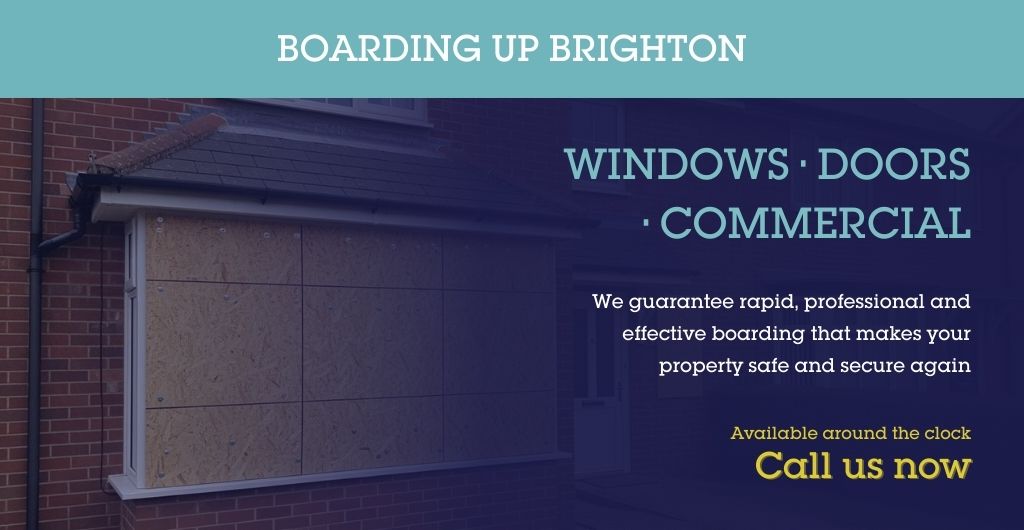
Property Types We Board Up in Brighton (BN1–BN88)
If you’re dealing with a broken window, forced entry, storm damage or an unsecured doorway, the next question is usually: “Do you handle properties like mine?” We do. Boarding Up Brighton provides boarding up services across Brighton & Hove and the wider BN postcode area (BN1–BN88), covering everything from compact city-centre flats to shopfronts on busy parades and vacant buildings between tenancies.
This page explains the main property types we secure, what typically goes wrong, and which options tend to work best—so you can make a calm, practical decision when things feel anything but calm.
If you need urgent help, go straight to emergency boarding up or contact us and we’ll talk you through the safest next step.
The three property types we specialise in
Different buildings fail in different ways. A smashed sash window in a Regency conversion near the seafront isn’t the same as a forced door at a trading estate unit, and a void property needs a different approach to a family home that’s occupied tonight. We generally group work into three categories:
- Residential boarding up (houses, flats, maisonettes)
- Commercial boarding up (shops, offices, pubs, restaurants, industrial units)
- Vacant property boarding up (empty homes, voids, probate, repossessions, long-term unoccupied)
If you’re not sure where you fit, call us and we’ll recommend the most suitable way to secure it—without pushing you into an option you don’t need.
Residential properties (homes, flats, HMOs)
Brighton’s housing stock is varied: Regency and Victorian terraces, converted seafront buildings, 1930s homes further out, plus plenty of modern apartments. That variety affects access, fixing methods, and the right materials.
Common residential call-outs
- Broken or cracked panes after an accident (often bay windows and large front elevations)
- Post-burglary damage to doors, frames, or ground-floor windows
(see burglary repairs and boarding up) - Storm-related failures—rattling frames, blown-in panels, or debris damage
(see storm damage boarding up) - Vandalism to street-facing windows or communal doors
(see vandalism repair and boarding up)
What we usually install for homes
For most residential jobs, we’re balancing security, safety, and keeping weather out, while also respecting that you may still be living there.
- Plywood boarding (often 18mm exterior-grade) for larger openings and better impact resistance
- OSB (commonly 12mm) for smaller windows or where a lighter, cost-effective panel is suitable
- Anti-tamper fixings to reduce the risk of boards being removed from outside (especially important if the property will be unattended overnight)
- Non-destructive fixing where possible, particularly on heritage-style frames or where you’re arranging glazing repairs quickly
If a frame is too weak, rotten, or broken to take a secure fixing, we’ll tell you before proceeding and explain your options (for example, securing to surrounding masonry or using a different method).
For the nuts and bolts of how we secure windows and doors, see window boarding in Brighton and door boarding in Brighton.
Commercial properties (shops, offices, pubs, restaurants & units)
Commercial sites have different priorities: protecting stock, reducing downtime, meeting insurer requirements, and keeping public-facing hazards safe. Brighton’s busy footfall areas—shopping streets, seafront venues, and late-night economy spots—also mean breakages can become a safety issue fast.
Typical commercial scenarios
- Smashed shopfront glazing (impact, attempted theft, or vandalism)
- Damaged entrance doors where the lock and frame have been compromised
- Back-of-house windows forced at quieter service roads or yards
- Short-notice securing after fire service attendance (we secure openings; remediation is separate)
(see fire damage boarding up)
What tends to work best for commercial sites
- Shopfront boarding designed for larger spans and street-level exposure
(see shopfront boarding in Brighton) - Temporary security measures that keep the public safe, especially if glass has fallen or the opening is at pavement level
- Clear documentation for facilities teams, landlords, and insurers—itemised invoices and a statement of works are standard, and we can provide time-stamped photos on request
If you manage multiple sites or need planned securing (for refurbishments, lease ends, or repeated vandalism), we can also advise on longer-term options such as steel security screens and temporary steel doors depending on the risk and how long the premises will be unattended.
Vacant, void and unoccupied properties
Void properties have their own risk profile. Even in quieter residential streets, empty buildings attract attention—opportunistic entry, copper theft, fly-tipping, and weather ingress if a small break is left open.
This type of work is common for landlords between tenancies, estate agents, probate situations, repossessions, and renovation projects.
What “good” looks like for a vacant property
When a building is empty, the goal is usually stronger deterrence and durability, rather than a short-term patch until a glazier arrives.
Depending on what you need, we may recommend:
- Heavier-duty boarding with anti-tamper fixings
- Temporary steel doors for damaged entrances or repeated break-ins (more robust than timber boarding on a doorway)
- Steel security screens where longer-term visibility, ventilation, and repeated access are needed (e.g., contractors coming and going)
For more detail, see vacant property boarding up.
How we decide the right method (and what we need from you)
There isn’t one “standard” board-up, because buildings and risks vary across BN postcodes. When you call, we’ll ask a few practical questions to avoid wasted time and ensure we turn up prepared:
- What’s damaged and where is it? (front window, rear door, upstairs landing window, rooflight, etc.)
- Is the property occupied tonight? (this changes whether you need access maintained)
- What’s the opening size and type? (single pane, bay, shopfront, patio door)
- Is there any immediate danger? (loose glass, exposed wiring, unstable frame)
- Any access constraints? (communal entry, narrow lanes, parking restrictions, upper floors)
If it’s safe, taking a couple of photos before we arrive can help us bring the right sheet sizes and fixings. If it isn’t safe—don’t risk it.
For background on what boarding up involves (and what it doesn’t), see what is boarding up?.
Situations we handle across all property types
Boarding up is usually triggered by an event. If you’re looking for “what to do next”, these guides are the quickest route:
- After a burglary: securing and repairs
- After vandalism: making the property safe
- After storm damage: emergency weatherproofing
- After fire damage: securing openings
- After flood damage: swollen frames and compromised doors
- After an accident or impact: securing and risk checks
Insurance, landlords and managed buildings (what we can and can’t do)
If you’re dealing with an insurer, a letting agent, or a facilities manager, paperwork matters almost as much as the physical security.
What we can do:
- Provide itemised invoices and a statement of works
- Provide photos (including time-stamped images where requested) to support your records
- Secure the property to reduce further loss and keep things safe while repairs are arranged
What we can’t do:
- Act as loss adjusters or approve claims
- Carry out glazing replacement, structural repairs, or smoke/odour remediation after fire (we focus on securing the building)
If you’re claiming, keep any police reference number and notify your insurer as early as possible. More guidance is here: insurance claims support.
FAQs (Property Types)
Do you board up flats and basement apartments in Brighton?
Yes. Flats are common in central Brighton and Hove, including basement levels and conversions. Access can be the main challenge (communal doors, stairs, restricted parking), so we’ll ask a few questions before arrival to bring suitable sheet sizes and fixings.
Can you secure a shopfront without making it easy to pull off from the street?
That’s one of the main risks we plan for. We use appropriate board thickness and anti-tamper fixings where required, and we’ll choose fixing points that resist external removal while still being safe for the building.
What if my door frame is too damaged to board securely?
If the frame won’t hold fixings safely, we’ll explain the options before starting. That might mean fixing to surrounding structure, or recommending a more robust option such as a temporary steel door depending on the opening and how long it needs to be secured.
Are you able to help if the damage is on the roof or a skylight?
Yes—where access is safe and appropriate. Rooflights and skylights often need a different approach to keep weather out and avoid creating new leaks. See roof boarding in Brighton.
Is boarding up covered by insurance for residential or commercial properties?
Often it can be, particularly after burglary, vandalism, storm damage, or accidental impact—but policies vary. We’re not able to confirm cover, but we can provide the documentation insurers typically request. Start here: insurance claims support.
Helpful Links
- 24 hour emergency boarding up in Brighton
- Residential boarding up
- Commercial boarding up
- Vacant property boarding up
- Boarding up pricing guidance
- Frequently asked questions
Ready to get started? Call 01273 092 166 or email us for a free, no-obligation quote.
