


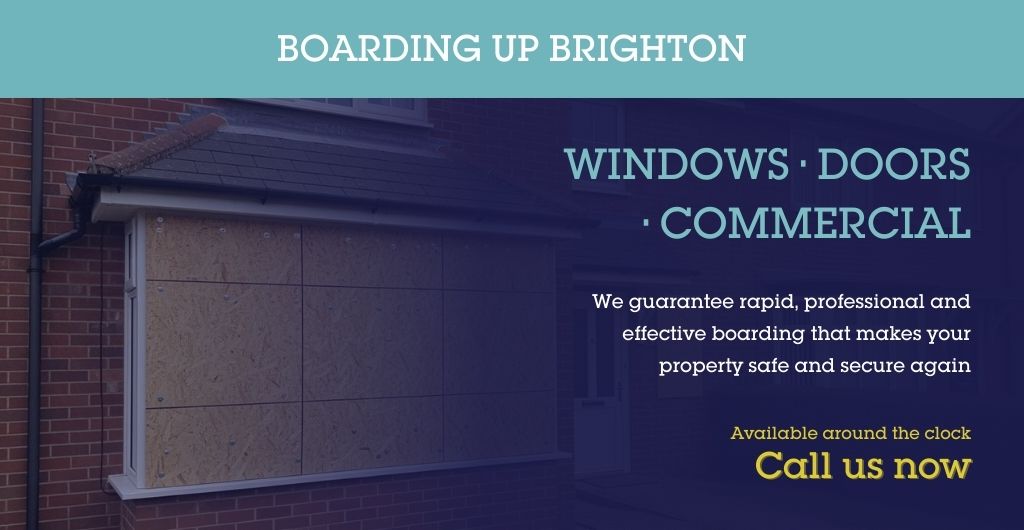
Vacant Property Boarding Up in Brighton & the BN Postcode Area
Vacant properties are magnets for trouble. Whether it’s a flat between tenants in Kemptown, a shop unit waiting for a new lease on London Road, or a larger building being refurbished near Brighton Station, an empty site can quickly become vulnerable to break-ins, vandalism and weather damage. Our vacant property boarding up in Brighton service is designed to secure doors, windows and other openings properly—without causing unnecessary damage to frames or surrounding brickwork.
Boarding Up Brighton covers BN1–BN88, working with landlords, letting agents, housing associations, facilities teams and private owners who need a building made safe quickly, or kept secure for weeks/months while plans move forward.
For urgent situations, see emergency boarding up. If you’re planning ahead, we can arrange a scheduled visit and help you choose the right method for the risk level and the length of time the property will be empty.
Why vacant properties in Brighton need a different approach
Brighton and Hove have a mix of housing stock and building styles that affect how you secure an empty property:
- Regency and Victorian terraces (common in central Brighton, Hanover and Hove): tall sash windows, bay fronts and decorative timberwork often need careful fixing points to avoid splitting frames.
- Converted flats and HMOs (around Lewes Road, Elm Grove, London Road): multiple access points, shared entrances and rear alleys can increase risk.
- Seafront commercial units (near Western Road, North Street, Brighton Marina): higher footfall means more visibility—and sometimes more opportunistic damage.
- Older outbuildings/garages and side access in suburbs like Patcham and Woodingdean: gates and secondary doors can be the weak link.
Vacant property security is also rarely “one-size-fits-all”. A probate property awaiting clearance needs a different setup from a retail unit being refitted, or a building with scaffolding up (which can make upper floors easier to access).
If you’re unsure what counts as “secure enough”, our overview on what boarding up is and how it works is a useful starting point.
Typical situations we see with empty buildings (and what we do)
Vacant properties become urgent for a few predictable reasons. Here are the most common call-outs we handle across Brighton and the wider BN area.
1) Between tenancies (landlords and letting agents)
A tenant moves out, keys are returned, and the property sits empty for a few weeks while it’s redecorated. Risks include:
- unsecured or damaged rear doors
- ground-floor windows that can be forced
- “viewings footfall” and key-handling issues
- opportunistic entry via poorly latched windows
In these cases, boarding may be targeted—securing a vulnerable rear window or damaged door—rather than covering the whole house.
2) After a break-in or attempted break-in
If someone has already tried the property, they may come back. We regularly carry out post-burglary securing where locks have been ripped, glazing smashed or door panels kicked in. Guidance and next steps are on our burglary repairs and boarding page.
3) Vandalism or repeated nuisance
Empty buildings can attract stone-throwing, graffiti damage and deliberate breakage—especially where there are alleyways or secluded access. If your priority is preventing repeat incidents, we’ll usually recommend more robust fixings and potentially longer-term solutions. See vandalism repair and boarding.
4) Storm damage and weather exposure
Brighton’s coastal weather can turn a small failure into a major one. Once a pane is gone or a rooflight is lifted, wind-driven rain gets in fast. Temporary security often doubles as emergency weatherproofing until repairs can be arranged. More on this is covered under storm damage boarding and roof boarding.
5) Fire or flood leaving openings and weak structures
After fire or flood, insurers and contractors may need access while the property remains empty. Our role is to secure broken openings and help control unauthorised entry—rather than carry out remediation (smoke/odour treatment and drying are outside our scope). If this matches your situation, read fire damage boarding and flood damage boarding.
How we secure a vacant property (step-by-step)
When you call us for vacant property boarding in Brighton and BN postcodes, we keep the process practical and transparent.
-
Quick questions on the phone
- What’s the address and postcode?
- What’s damaged or open (doors, windows, rooflights)?
- Is the building occupied at all?
- Are there any access issues (rear alley, basement area, scaffolding, height)?
-
On-site assessment We check frames, surrounding masonry and any signs of previous forced entry. If a frame is too damaged for non-destructive methods, we’ll explain options before proceeding.
-
Choose the right security method Short-term (days) versus medium-term (weeks/months) makes a big difference to what’s sensible and cost-effective.
-
Install using appropriate materials and fixings We use fixings designed to resist removal from the outside and to keep boards tight without “rattling” in windy conditions.
-
Documentation You can request:
- time-stamped photos of the secured openings
- a clear work description
- an itemised invoice suitable for landlords, agents, or insurance admin
For insurance-related jobs, see insurance claims support (we’re not loss adjusters, but we provide the documentation insurers typically ask for).
Methods and materials for vacant property boarding
The right method depends on how long the property will be empty, how visible it is, and whether it’s been targeted before.
Plywood boarding (common for windows and shopfront panels)
For many vacant property jobs we use 18mm exterior-grade plywood for strong, stable coverage on larger openings. Plywood holds fixings well and copes with day-to-day knocks better than thinner sheet material.
This approach is often used alongside window boarding in Brighton for smashed panes, cracked glazing or vulnerable ground-floor windows.
OSB boarding (useful for smaller, lower-risk openings)
For smaller windows or where the risk is lower and the board is genuinely temporary, 12mm OSB can be appropriate. We’ll advise if OSB is suitable—coastal exposure and high footfall locations often justify plywood instead.
Anti-tamper fixings and sensible fixing points
Vacant properties are more likely to be tested. Where appropriate we use anti-tamper fixings to reduce the risk of boards being removed from the outside. We also aim to use fixing points that:
- keep the board tight to the reveal
- avoid crushing uPVC frames
- minimise damage to surrounding masonry where possible
Temporary steel doors (for repeated issues or medium-term voids)
If a door has been smashed or the lock area is compromised, boarding the doorway can work—but it can also be awkward for authorised access (contractors, surveyors, agents).
A temporary steel door is often the best balance of security and usability: it provides a lockable, robust entry point without leaving you repeatedly removing/replacing boards. This is usually arranged through our door boarding service.
Security screens and longer-term options
For some void properties—especially those that have been targeted repeatedly—screens may be more appropriate than timber. If you’re managing multiple units or a longer vacancy period, talk to us about the best approach for your building and budget.
Rooflights and skylights (often overlooked)
Flat-roof rooflights, skylights and side returns can be a weak point—particularly where there’s scaffolding or easy access from a neighbouring structure. Our roof boarding service covers securing these openings and reducing rain ingress until proper repairs are carried out.
Micro case study: securing an empty flat near London Road
A landlord had a vacant first-floor flat near London Road while organising refurbishment. The rear access was via a shared route that connects towards Preston Park Station, and the property had previously had nuisance issues.
We attended to find a small broken pane and signs that someone had tried the rear door. Because contractors needed access during the week, we installed window boards with anti-tamper fixings and recommended a more secure approach to the doorway rather than repeatedly boarding/unboarding it. The client received time-stamped photos and a clear work statement to keep alongside their tenancy paperwork and insurer correspondence.
(Every building is different—this is the sort of scenario we commonly see in busy, mixed residential areas of Brighton.)
What you can do immediately (before we arrive)
If it’s safe to do so:
- Take photos of damage and any entry points (useful for insurers and landlords/agents)
- Keep your police reference number if there’s been a crime
- Don’t touch broken glass or step on debris—especially around shopfronts
- Remove valuables if access is safe and you’re authorised to do so
- Tell us about hazards (loose render, unstable frames, alarms, internal dogs, sharps)
If you need urgent help, use our emergency boarding up service. We don’t quote guaranteed arrival times—traffic, access and job complexity vary—but we prioritise genuinely urgent, insecure properties.
Vacant property boarding for landlords, agents and facilities teams
We regularly work with:
- landlords and portfolio owners
- letting agents managing check-outs and void periods
- estate agents securing probate properties
- housing associations and facilities managers
- building contractors who need a site secured between trades
If you have specific site requirements (keys, access notes, parking restrictions, or RAMS), tell us up front and we’ll do our best to accommodate.
For broader service context, see boarding up services in Brighton and the areas we cover.
Areas we cover for vacant property boarding (BN1–BN88)
We’re based around Brighton and cover the full BN postcode area. That includes central Brighton and Hove (BN1/BN2/BN3), plus surrounding locations such as:
- boarding up in Hove
- boarding up in Portslade
- boarding up in Shoreham-by-Sea
- boarding up in Lewes
- boarding up in Peacehaven
- boarding up in Newhaven
If you’re not sure whether you’re in range, check areas we cover or get in touch via our contact page.
FAQs: vacant property boarding up in Brighton
How long can boarding stay in place on a vacant property?
It depends on the method and exposure. Plywood/OSB boarding can be used short-to-medium term, but if you expect a longer void period or repeated targeting, it may be more practical to use a temporary steel door for access and/or more robust security measures. Tell us your expected timeline and we’ll recommend an appropriate setup.
Is boarding up covered by insurance for an empty building?
Often it can be, particularly after an insured event like burglary, impact or storm damage—but policies vary, especially for unoccupied periods. We’re not insurance advisers, but we can provide the photos, description of works and invoices insurers typically request. See insurance claims support.
Can you secure just one vulnerable window or door rather than boarding the whole property?
Yes. Many void-property jobs are targeted: a ground-floor rear window, a damaged door panel, or a side access point. We’ll talk through what’s most vulnerable and what’s proportionate for your risk level and budget.
Do you work in quieter villages as well as Brighton itself?
Yes—across the BN postcode area, including villages and rural locations. If you need local help, start with areas we cover or call us with the postcode.
We have contractors coming in and out—can the property still be accessed?
Yes. Where regular access is needed, we often recommend solutions that keep the building secure while allowing authorised entry—such as a temporary steel door rather than repeatedly removing boards. Our door boarding service explains the options.
Helpful links
- emergency boarding up
- window boarding in Brighton
- door boarding in Brighton
- roof boarding in Brighton
- insurance claims support
- areas we cover
Ready to get started? Call 01273 092 166 or email us for a free, no-obligation quote.
