


Situations We Help With (Brighton & BN Postcodes)
When something goes wrong with your property, it rarely happens at a convenient time. A smashed window on Western Road, a forced door in a shared entryway in Kemptown, or storm damage that’s opened up a roofline in Patcham can leave you feeling exposed and unsure what to do next.
This page explains the common situations we’re called out for across Brighton and the wider BN postcode area (BN1–BN88), what we can do to secure your property, and what you can do immediately to protect people, belongings, and your insurance position.
If you need urgent help, our emergency boarding up service is available day and night.
First: make it safe (a practical checklist)
Before anything else, make sure you and anyone on site are safe. If you’ve had a break-in, impact damage, or fire, there may be hazards you can’t see.
If it’s safe to do so:
- Keep people away from the damaged area (especially where there’s broken glass, loose frames, or a compromised door).
- Don’t touch suspicious damage after a burglary—police may want to inspect it. Keep your crime reference number.
- Take a few photos of the damage and the surrounding area (wide and close-up) for your insurer.
- Cover only if it’s safe: a towel at the base of a door can limit draughts and rain, but avoid climbing ladders or leaning on unstable frames.
- Call to arrange securing: tell us what’s happened, what’s damaged (window/door/shopfront/roof), and whether the property will be left unattended.
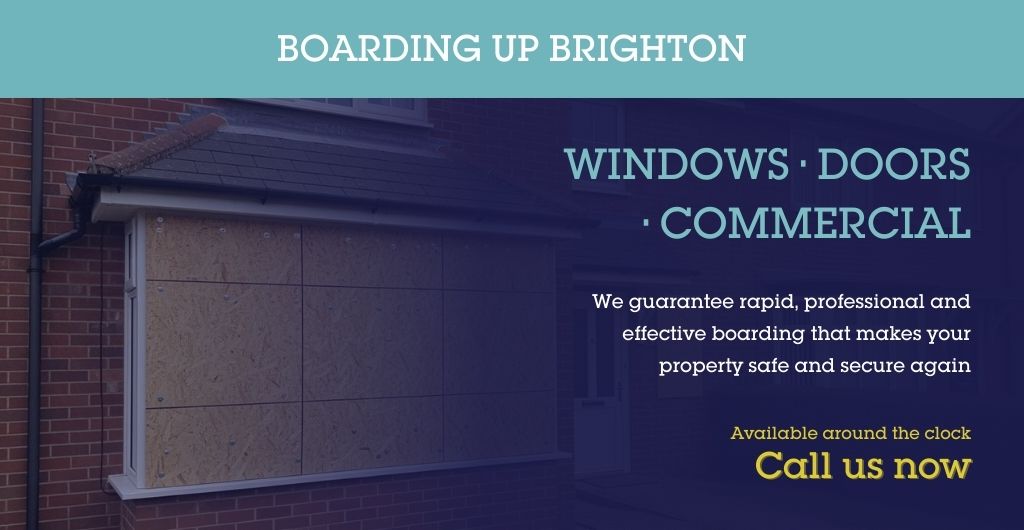
When we attend, we focus on making the property secure and weather-resistant using the most appropriate method—usually window boarding in Brighton or door boarding in Brighton, and for commercial units, shopfront boarding. If the damage is overhead or weather exposure is severe, roof boarding may be needed.
The situations we’re most often called out for in Brighton & BN
Brighton’s a busy city with a mix of student lets, converted Regency buildings, basement flats, seafront commercial units and industrial estates along the A23/A27 corridor. The wider BN area includes everything from seaside towns to quiet villages—meaning the “right” way to secure a property can vary from one street to the next.
Below are the core situations we help with, plus what usually happens next.
After a burglary or attempted break-in
A burglary isn’t just upsetting—it often leaves a property physically vulnerable. Common issues we see include:
- Door locks forced, door edges split, or frames cracked
- Glass panels smashed in doors (including uPVC composite doors)
- Ground-floor windows broken or left insecure
- Rear access points compromised (patio doors, side gates, communal doors)
Our role is to secure the opening so the property can be left safely until permanent repairs are arranged. That may mean boarding a smashed window, boarding a door opening, or fitting a stronger temporary option where appropriate.
If the frame is too damaged for a neat, non-destructive fix, we’ll explain the options before proceeding. We’re not locksmiths or a glazing company, but we work alongside those trades all the time and can stabilise the site so they can do their job safely.
Related page: burglary repairs and boarding up
After vandalism (including smashed windows)
Vandalism can be random and fast—especially on busy routes and nightlife areas. In Brighton, we’re often asked to board:
- Smashed street-facing windows and bay windows
- Damaged shopfront glazing and entrance doors
- Broken communal entrance panels in apartment blocks
For many customers, the immediate concern is visibility: a boarded opening can feel like a beacon. We use solid, properly fixed sheets (commonly 18mm exterior-grade plywood for larger openings) and anti-tamper fixings where removal from outside is a risk—particularly important for properties that will be empty overnight.
Related page: vandalism repair and boarding
Storm damage and wind-blown debris
Along the coast, strong winds can turn minor defects into big problems quickly. Inland across BN villages, falling branches and tiles after heavy weather are common triggers for emergency calls.
Storm-related issues we secure include:
- Windows cracked by debris or pressure changes
- Doors that no longer latch properly after frame movement
- Loose panels or broken skylights allowing water ingress
- Exposed roof sections and damaged soffits/fascias (where there’s a direct opening)
Boarding isn’t a “repair” to the building fabric, but it buys you time—preventing opportunistic entry and limiting further weather damage while you organise glazing, roofing, or joinery work.
Related page: storm damage boarding up
Fire damage (post-fire securing)
After a fire, even if the flames are contained, windows can be blown out, doors may be forced by emergency services, and the property can be left open to the elements.
We can help with post-fire securing, including boarding door and window openings and, where suitable, stabilising access points so the site can be made safe for follow-on contractors.
Important limitations (so you’re not misled):
- We don’t carry out smoke/odour remediation or structural fire restoration.
- If the fire service or building control restricts access, we work within those boundaries.
Related page: fire damage boarding
Flood damage and water ingress
Flooding can warp timber, swell doors, and make frames unreliable. Even when the water has receded, openings can be difficult to secure properly.
We’re often called when:
- A door won’t close or latch after swelling
- A window frame has shifted or the glass has cracked
- A basement flat has had water ingress and needs temporary protection
- A property needs controlled ventilation while being secured
In flood scenarios, we’ll talk through the best balance between security and airflow. Sometimes full boarding is right; other times, a more considered approach is needed depending on drying equipment and the insurer’s requirements.
Related page: flood damage boarding
Accidental impact damage (vehicle strikes, breakages, building works)
Not every emergency is a crime. We regularly attend accidental damage such as:
- Vehicle impact to low walls, doors, shopfronts, or bay windows
- Glazing cracked during building works or removals
- Damaged frames following a fall or internal accident
If there’s any suggestion of structural instability (for example, a shopfront has been struck and the frame is moving), we’ll prioritise making the opening safe and secure and may advise that you involve a builder/structural professional before permanent reinstatement.
Related page: accident damage boarding
What we actually do when we board up (materials and methods)
Boarding up is not just “putting wood over a hole”. The method matters—especially in Brighton where many properties are older (sashes, bay windows, ornate surrounds) and you want security without unnecessary damage.
Depending on the opening and risk level, we may use:
- Exterior-grade plywood (often 18mm for larger openings) for strength and durability
- OSB (commonly 12mm for smaller or lower-risk openings) where appropriate
- Anti-tamper fixings when the board could be removed from outside
- Through-bolting and pattress boards to spread load and reduce damage to frames
- Solutions tailored for commercial sites, alongside shopfront boarding
If you need something more secure than timber boarding—especially for repeated incidents or an empty building—we can discuss options suited to medium-term securing.
If you’re unsure what “boarding up” involves, this explainer may help: what is boarding up?
What you’ll get from us (useful for landlords and insurance)
People often call us while they’re on the phone to an insurer or property manager. We’re not loss adjusters or legal advisers, but we can provide documentation that insurers typically ask for.
You can expect:
- A clear description of what was secured (which openings, method used)
- An itemised invoice and work statement
- Time-stamped photos where appropriate (useful for absent landlords, agents, or facilities teams)
More guidance here: insurance claims support for boarding up
Brighton & BN coverage: where these situations happen most
We cover Brighton and Hove and the surrounding BN postcodes, including busy central areas, quieter residential streets, and villages further out.
We’re used to attending:
- High-footfall commercial stretches and late-night areas (e.g., around London Road and Western Road)
- Residential neighbourhoods with older housing stock and vulnerable ground floors (e.g., Hanover terraces, Kemptown conversions)
- Family suburbs and larger properties where access is different (e.g., Patcham and Withdean)
- Coastal and downland locations where wind exposure is a factor
For local pages by town/village, see areas we cover.
FAQs about boarding up after an incident in Brighton
How quickly can you come out?
We prioritise urgent calls, including out-of-hours, but we don’t promise fixed arrival times—traffic, access, and the nature of the job can change what’s possible. If you need immediate help, start with emergency boarding up and tell us if the property is exposed or unsafe.
Is boarding up covered by insurance?
Often it is, particularly after burglary, vandalism, storm damage, fire, or impact—but policies differ. It helps to keep your crime reference number (if applicable), take photos, and contact your insurer early. We can provide an invoice and photos to support your claim: insurance claims support.
Can you board up a sash window or bay window without ruining the frame?
In many cases, yes. Brighton has plenty of sash windows and bays (especially in older terraces and conversions). We aim to use fixing methods that are secure while minimising unnecessary damage, and we’ll explain the approach before we start—especially if the timber is already rotten or split.
What if the door frame is too damaged to board neatly?
If the frame can’t safely take fixings, we’ll talk you through options on site. Sometimes boarding is still possible using alternative anchoring methods; other times the safest option is a different temporary security measure until a joiner or locksmith attends.
I’m a landlord/agent—can you liaise with tenants or a keyholder?
Yes. Many of our call-outs involve landlords, managing agents, and short-let operators. If a tenant, caretaker, or facilities contact is on site, we can coordinate access and provide photos/information so you can keep your records straight.
Next steps: tell us what’s happened, and we’ll secure it
If you’re dealing with a break-in, smashed glass, storm damage, fire, flood, or an accident, the priority is to secure the opening and reduce further loss. We’ll ask a few practical questions, then advise the best way to board up or secure the area.
Need help now? Call 01273 092 166 for immediate assistance.
Or if it’s not urgent, you can email us with photos and the address for advice.
